Can You Sell Inherited Gold Jewellery?
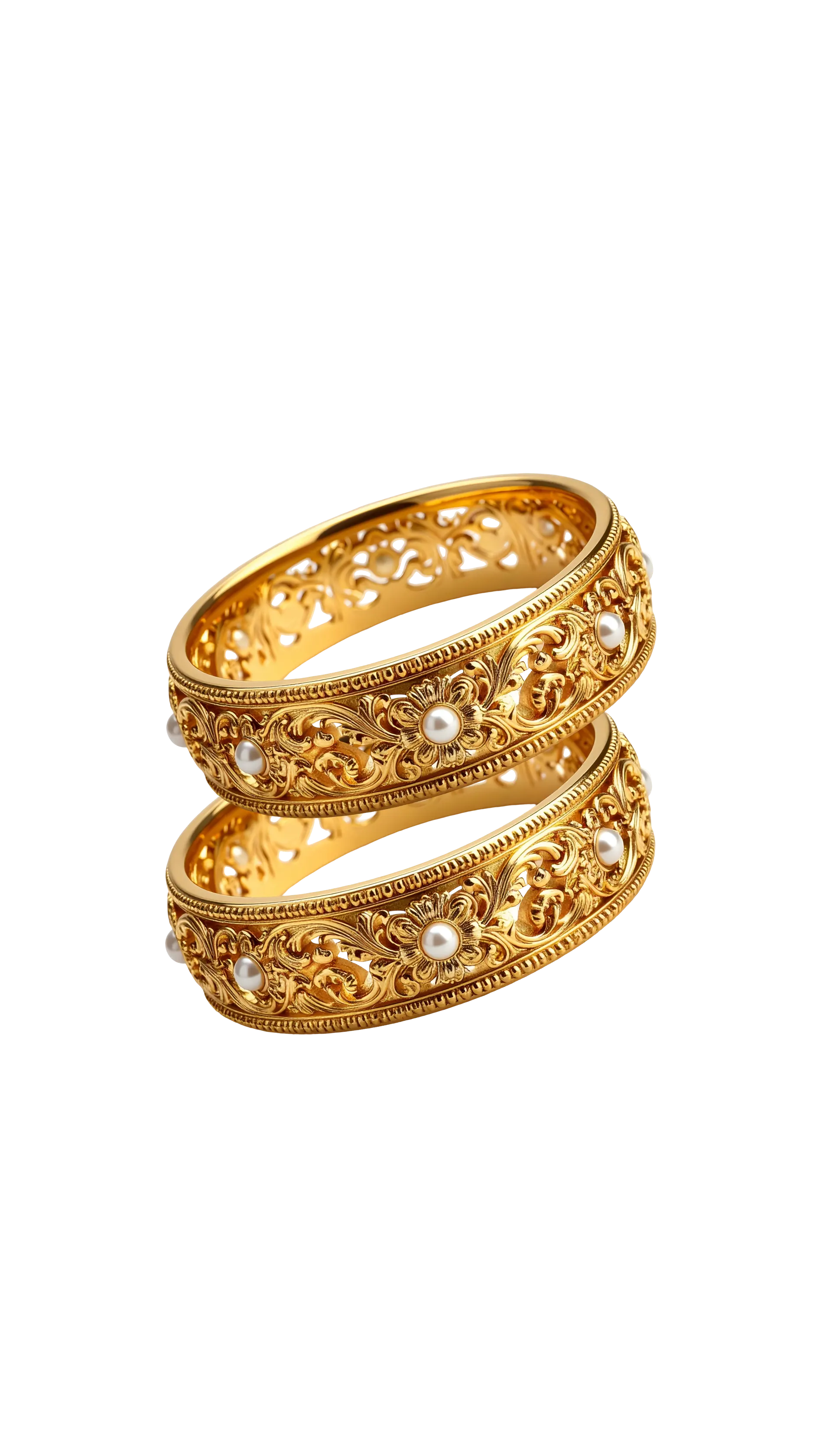
Can You Sell Inherited Gold Jewellery?
Yes. Inherited gold jewellery can be sold in India, and no bill or original receipt is required to do so. The two things that genuinely matter are ownership — being clear that you have the right to sell, particularly where several heirs have a claim — and valuation, since old ornaments are frequently solid, high-purity and heavier than modern jewellery. Inheritance itself is not taxed on receipt; tax arises only on any gain when you sell, calculated using the original owner's cost and holding period.
A locker is opened after a bereavement, or a mother hands over the jewellery she was given at her own wedding, and a familiar question follows: is it actually allowed to sell this?
The short answer is yes. But inherited gold raises questions that a piece you bought yourself does not — about who has the right to sell it, how it is taxed, and how ornaments made fifty years ago are valued today. This guide works through each of those.
The Short Answer: Yes, Inherited Gold Can Be Sold
There is no law in India preventing the sale of inherited gold jewellery. It is your property once it has passed to you, and you may sell it as you would anything else you own.
You do not need the original purchase bill. Most inherited gold has no surviving paperwork — the receipt is decades gone, or was never kept, or the piece was itself a gift. None of that is an obstacle to selling.
First, ownership: be clear that you have the right to sell, especially where other heirs may have a claim. Second, valuation: old ornaments must be tested and weighed, because their purity is rarely what anyone assumes.
Who Legally Owns Inherited Gold?
This is the question worth settling before you go anywhere near a valuation, because it is the only one that can genuinely cause trouble later.
How ownership passes depends on the circumstances:
- Gold given to you during the owner’s lifetime — a gift, or jewellery received at your wedding — is straightforwardly yours.
- Gold left to you specifically in a will passes to you as named.
- Where there is no will, the jewellery forms part of the estate and passes to the legal heirs under the succession law applicable to the family.
- A nominee on a bank locker is not automatically the owner. A nominee is entitled to receive and hold the contents; the legal heirs are entitled to them.
That last distinction surprises people regularly. Being the nominee on a locker means you can lawfully take the jewellery out. It does not, by itself, settle who it belongs to.
When More Than One Person Has a Claim
The most common complication with inherited gold is not legal at all — it is family. A parent dies without a will, several siblings have an equal claim, and the jewellery sits in one person’s custody.
The practical guidance here is simple and worth following:
- Agree among the heirs before selling, not after. A sale is difficult to unwind.
- Get the lot valued first, without selling. A clear figure — item by item, with purity and weight — often makes an amicable split far easier to reach than arguing over unvalued objects.
- Consider dividing the jewellery itself rather than the proceeds, if the pieces lend themselves to it.
- Where a genuine dispute exists over specific items, set those aside and do not sell them until it is resolved.
A valuation is not a commitment to sell. Having the lot properly tested and weighed, and receiving a written breakdown, is frequently useful to families purely as a basis for a fair division.
Do You Need the Original Bill?
No. Selling gold without a purchase bill is entirely legal in India, and with inherited jewellery it is the norm rather than the exception. Purity is established by testing, not by paperwork.
The bill has one relevance, and it is a tax one rather than a legal one — it evidences the original purchase cost. Where no bill exists, that cost is arrived at another way, as set out below.
Read: Is It Legal to Sell Gold Without a Bill in India? →
What Paperwork Is Involved
Selling inherited gold requires the same identification any gold sale does — valid ID for the seller, and PAN where the transaction value crosses the applicable threshold. There is no special "inheritance certificate" needed to sell jewellery.
Where an estate is being formally administered, or where a bank locker is involved, the succession paperwork sits between you and the jewellery rather than between you and the sale. Once the gold is lawfully in your hands, selling it is an ordinary transaction.
Read: Documents Needed to Sell Gold in West Bengal — the full checklist →
How Inherited Gold Is Taxed When You Sell
Two separate moments matter, and conflating them causes most of the confusion.
Receiving the inheritance is the first, and it is not itself a taxable event — India has had no estate duty since 1985. Inheriting jewellery does not create a tax liability at the point you receive it.
Selling it is the second. If you sell for more than the cost of acquisition, the gain may be taxable as capital gains. For inherited assets the rules work in your favour on two counts:
- The cost of acquisition is the cost to the previous owner — not zero, and not the value on the date you inherited it.
- The holding period includes the previous owner’s period of holding, so long-held family gold generally qualifies as a long-term asset rather than a short-term one.
Where the original cost genuinely cannot be established — the usual position with jewellery from the 1960s or 1970s — a fair market value basis is used instead, referenced to a prescribed date under the applicable rules.
Capital-gains rates, holding-period thresholds and indexation rules are revised from time to time in the annual Budget. The principles above are stable; the numbers are not. For a large sale, or where a significant gain is likely, confirm the current position with a chartered accountant before you transact.
Income Tax Department — official guidance on capital gains ↗
Why Inherited Jewellery Is Often Worth More Than People Expect
There is a genuine pattern here, and it works in the seller’s favour more often than not.
Jewellery made two or three generations ago was usually commissioned rather than bought off a shelf, made to be substantial, and intended to last. Compared with much modern retail jewellery, older ornaments tend to be:
- Solid rather than hollow or machine-lightened
- Made at 22K, and sometimes higher, rather than 18K
- Heavier for their size, because weight was the point
- Free of the stone settings that reduce net gold weight in contemporary designs
A single old bangle can therefore hold considerably more gold than a modern piece of similar appearance. People frequently underestimate an inherited lot precisely because the designs look dated — but design has no bearing on gold content.
And Sometimes Less: What to Watch For
The pattern is not universal, and honesty cuts both ways. Several things common in older jewellery reduce net gold weight:
- Lac filling — hollow bangles and chur filled with lac to give bulk. The lac weighs a good deal and is worth nothing.
- Thread and shell components in traditional Bengali pieces, which are deducted along with everything non-gold.
- Stone and glass settings in older work, often uncertified.
- Mixed purity across a lot, where pieces were acquired at different times from different karigars.
- Gold-plated or gilded items — particularly deity ornaments and religious pieces — which contain negligible recoverable gold.
This is why an inherited lot should be assessed piece by piece rather than valued as a single weight. Two ornaments of identical gross weight can differ substantially once tested.
How Very Old Ornaments Are Valued
Almost all inherited jewellery pre-dates the modern hallmarking system, so it carries no BIS mark and no HUID. That is entirely normal and is not a sign that anything is wrong with the gold.
Because the stamp is absent or unreliable, purity has to be established by testing rather than assumed. Each item is tested, weighed net of non-gold components, and valued at the applicable buying rate on that verified content.
Read: 916 Hallmark & HUID Explained — why older gold has no HUID →
Selling Part and Keeping Part
Inherited jewellery is rarely a purely financial matter. A grandmother’s har may be something you would never part with, while the six mismatched bangles beneath it in the same box have sat unworn for twenty years.
There is no requirement to treat the lot as one decision. Having everything valued and then selling only what you choose is perfectly ordinary, and is what most families actually do. Keeping the pieces that carry memory and releasing the ones that do not is a reasonable outcome, not a compromise.
Should You Sell, or Have It Remade?
Remaking is the common alternative — melting old ornaments into something wearable today. It suits people who want to keep the gold in the family but not the design.
Be clear about what it costs, though. Remaking means paying fresh making charges on the new piece, and typically a melt or refining loss on the old metal. If you want gold jewellery you will actually wear, that can be worth it. If what you need is money, selling and remaking are not close substitutes — remaking converts gold into a different object, not into funds.
Read: Why the Price You Paid for Jewellery Differs From Its Resale Value →
How Auriksha Handles Inherited Gold
A large share of what we see is inherited — unmarked, decades old, often arriving in an old cloth pouch or a biscuit tin with no paperwork at all. None of that is unusual and none of it is a problem.
Each piece is tested to establish its actual purity and weighed for net gold content, with a fixed 2% margin and 1% dust and wax deduction as the only deduction and no melting-loss charges. The working is shown item by item before you decide anything. If you are valuing a lot in order to divide it among heirs rather than to sell it, say so — the itemised breakdown is often exactly what a family needs.
Service: Old Gold Buyer — inherited and unmarked jewellery accepted →
Selling inherited gold is legal and needs no bill. Settle ownership among the heirs first, have the lot tested and weighed piece by piece, and remember that only the gain on sale is taxable — not the inheritance itself.